

On February 19, 2026, American figure skater Alysa Liu delivered a flawless routine to win the womens individual title at the Milano Cortina Winter Olympics. Her victory ended a 24-year gold medal drought in the event for the United States (US). The last American woman to win was Sarah Hughes in 2002.
When the wind blows on Mars, electricity crackles through the air. And for the first time, scientists have detected this.
NASAs Perseverance rover aka Percy captured the data. Its microphone recorded sounds and electrical interference from dozens of electrical discharges. They had been sparked by colliding dust grains.
Researchers shared their discovery November 26 in Nature.
The electric jolts were fairly small. Each was only about as strong as the shock from touching a doorknob on a dry, winter day. Still, they could pose a risk to future astronauts and electronics. They also could make it harder to search for Martian life.
Its like mini-lightning, explains Baptiste Chide. This planetary scientist works at the University of Toulouse in France. These discharges are centimeter-scale electric arcs, he says. Each one that his team detected produces a crack and a shock wave.
There are thousands of kilometers (miles) of dust-storm fronts on Mars that can make these jolts, Chide says. So we think there are plenty of these small discharges happening.
Snap, crackle, pop
When airborne particles slide against or bump into each other, their surfaces can become charged. (This is similar to what happens when you rub two balloons together.) On Earth, countless such interactions occur within sandstorms and volcanic ash plumes. Particle collisions build up electrical fields that eventually discharge as arcs of electricity.
The phenomenon is called triboelectricity (TRY-boh-ee-lek-TRIS-ih-tee).
Lets learn about static electricity
For decades, lab tests and computer models had hinted at triboelectricity flashes within dust storms and dust devils on Mars. But none had confirmed it.
Chide and his colleagues previously recorded the sounds of a Martian dust devil. In them, they heard a loud clicking. At the time, they thought it was the sound of dust grains striking the microphone. But one day, Chide heard other scientists at a conference discuss Martian triboelectricity. That led to a shocking realization: Those clicks might have been zaps.
To find out, his team modeled the electrical interference that the rovers microphone would pick up from a nearby discharge. Then they compared that to the actual interference the mic had picked up.
A Martian zap
In this recording taken by NASAs Perseverance rover, you first hear the rumble of a gusting dust devil. Then, around 10 seconds in, you can hear the sputtering clicks generated by an electrical discharge.
The signatures matched perfectly.
Excited, the researchers reviewed 28 hours of recordings taken over two Martian years. A total of 55 discharges occurred within about two meters (6.5 feet) of the microphone. Most occurred at the windiest times. Sixteen showed up during dust devils.
The largest zap packed 40 millijoules of energy, the scientists estimate. Thats similar to the zap of an electrical bug swatter.
Theres no doubt in my mind that it was an electrical signal that they measured, says Joshua Mndez Harper. This electrical engineer at Portland State University in Oregon did not take part in the new work. But Mndez Harper wonders if the rover may have influenced those electrical signals. Triboelectricity likely happens on Mars anyway, he says. But it might behave differently around a metal spacecraft.
Zappy hazards
The jolts wont kill astronauts, Chide points out. But they could degrade spacesuits over time. Or they might disrupt spacecraft electronics and instruments.
Whats more, zaps could get in the way of searching for evidence of Martian life. The discharges may spark a reaction that creates oxidants. These types of chemicals can destroy organic molecules, Chide says. And they might be signs of life.
Percy is gathering rocks and soil for a future spacecraft to bring back to Earth. Those samples are likely protected. Some are nestled safely inside the rovers metal skeleton. Others have been left behind on the ground inside metal tubes that should shield them from electricity, Chide says. Still, any of them might have been zapped prior to collection.
This discovery calls for a next generation of instruments dedicated to measuring electric fields at the surface of Mars, Chide says. That could help scientists find out how much electricity is zipping through the Red Planets atmosphere. And that could reveal more about what its effects might be.
.cheat-sheet-cta {
border: 1px solid #ffffff;
margin-top: 20px;
background-image: url("https://www.snexplores.org/wp-content/uploads/sites/3/2022/12/cta-module@2x-2048x239-1.png");
padding: 10px;
clear: both;
}
Do you have a science question? We can help!
Submit your question here, and we might answer it an upcoming issue of Science News Explores
Have you heard of our five main senses? They are sight, hearing, smell, taste, and touch. Each one helps us explore the world around us in a different way. For example, our eyes let us see colors and shapes, while our ears let us hear sounds and music. Our noses allow us to smell different […]
These make a great treat. If you love s’mores then you will love this. A smore you can make inside. YOU WILL NEED 1.) Marshmallows big or small [big is recommended]. 2.) Chocolate chips. 3.) Graham Crackers. STEP ONE: Melt the chocolate chips and marshmallows together in the microwave for 30 to 45 seconds. Note: […]
Have you ever heard of origami? Its an art form where you fold a piece of paper into shapes or objects like airplanes, flowers, and animals. Have you ever tried making origami? If you havent, its fine. Here are some examples you can try at home! Now, heres an interesting story. Did you know that […]
Dogs are amazing helpers for people in many ways. They can be trained for important jobs, like police dogs that find bombs or lost people. They have keen noses to smell things humans cant. Some dogs even help solve cold cases or unsolved criminal investigations. Heres a cool story: A former police dog called Maple […]
Hey friends, this is part 2 of the Christmas gift ideas. 1. Electronics: I would definitely recommend getting an Apple iPhone or an Apple iPad. I just got an iPad, and it’s working great so far! 2. Lip products: Some of the lip products that I recommend are actually on my Wishlist this year. […]
Before, I wrote about a two-year-old boy from Britain who became the youngest member of the Mensa High-IQ Club. If you havent read it yet, you can check it out here. Now, I will share another story about an amazing ten-year-old girl named Poppy OMalley-Flack, who just got invited to join Mensa after a test […]
Have you ever heard of the Michelin Guide or Michelin Star? You might have come across it online or in the news, especially when restaurants receive a Michelin star or are aiming to get one. You mightve recently eaten at a place with a Michelin star or have heard friends talk about it. If not, […]
We must have an astronomy group because many people look up into the night sky, wondering, What is that flashing light? or What is that thing flying through the night sky? Many people are interested in finding out things like: There are so many things about the night sky that we dont know. This group […]
Bad news, earthlings. Computer models of the solar systems future reveal a new risk facing us all. The gravitational tug of a passing star could cause another planet to smack into Earth. Or it might fling our planet into the sun. Or it could send Earth far away from the sun, where any inhabitants would freeze.
None of these things are probable, says Nathan Kaib with a laugh. This astronomer works at the Planetary Science Institute, based in Iowa. He teamed up for this research with astronomer Sean Raymond, at the University of Bordeaux in France.
Over the next 5 billion years, they calculate, Earths chance of an apocalypse caused by a passing star is only 0.2 percent. That figure is based on the number of stars passing near our solar system. Thats pretty slim odds of a drive-by star destroying or ejecting Earth within the lifespan of our sun.
Still, its a much greater risk than past studies had found. Those estimates hadnt accounted for the long-term influence of passing stars.
Kaib and Raymond posted their findings to arXiv.org on May 7. Later this year, the journal Icarus will publish them, too.
.cheat-sheet-cta {
border: 1px solid #ffffff;
margin-top: 20px;
background-image: url("https://www.snexplores.org/wp-content/uploads/2022/12/cta-module@2x-2048x239-1.png");
padding: 10px;
clear: both;
}
Do you have a science question? We can help!
Submit your question here, and we might answer it an upcoming issue of Science News Explores
The role of our planetary neighbors
If another star gets too close to us, Mercury will be key to the risk of Earths demise.
The innermost planets orbit around the sun is fairly oval-shaped. And astronomers have long known that Jupiters gravity can stretch its orbit out even more. The new models show that passing stars heighten this danger.
In those models, Mercurys orbit becomes so elongated that the planet typically collides with the sun or Venus. The resulting chaos sometimes causes Venus or Mars to crash into Earth. Other times, Earth crashes into the sun. Or Venus and Mars can fling our world toward Jupiter. The giant planets gravity then ejects Earth from the solar system.
Its a little scary how vulnerable we may be to planetary chaos, says Renu Malhotra. A planetary scientist, she works at the University of Arizona in Tucson.
Poor Pluto faces a 4 percent risk of getting booted from the solar system or smashing into a giant planet during the next 5 billion years, thanks to passing stars. Here, Pluto is seen in an image taken by the New Horizons spacecraft.NASA/Johns Hopkins University Applied Physics Laboratory/Southwest Research Institute
Malhotra thinks past encounters with other stars have already influenced the solar system. For instance, one would expect the giant planets to have nearly circular paths around the sun. Thats because the planets formed from a disk of gas and dust with a nearly circular orbit. But today, three of the giant planets Jupiter, Saturn and Uranus have somewhat oval-shaped orbits. The gravity of passing stars may have tugged them onto these paths.
The most dangerous stars, Kaib says, are those that come closest less than 100 times as far from the sun as Earth is. Stars that move slowly are also risky. Especially ones that move less than 10 kilometers (6 miles) per second relative to the sun. That cosmic snails pace extends how long their gravity will be able to tug on the planets.
However bad things look for Earth, though, be glad you dont live on distant Pluto.
Without passing stars, Pluto was thought to have an even more stable orbit than Earth. But once you allow stars to alter the solar system and push things around, Kaib says, Pluto is in trouble. It can skirt by the giant planets. Then their gravity can kick it out of the solar system. Or Pluto can smash into one of them.
Over the next 5 billion years, the chance of such a fate befalling Pluto is about 4 percent. Thats 20 times greater than the risk facing Earth.
There is one upside to Pluto getting booted from the solar system, though. It might just end the long-standing debate over whether Pluto is really a planet.
Quasi-satellite (noun, QWA-see-SAT-el-lite)
A quasi-satellite is a space object such as an asteroid that appears to orbit a planet like a true satellite. However, the object lies beyond the reach of much of that planet’s gravity.
The prefix quasi- means to resemble something. A quasi-satellite resembles a true satellite. But it’s not one.
Earth’s moon is a true satellite. The sun exerts more gravitational pull on the moon than Earth does. Even so, Earth controls much of the moon’s orbit. That control comes from the moon’s closeness to Earth. The moon orbits within the Earth’s Hill sphere the space around a planet where the planet’s gravity dominates. The Earth, meanwhile, orbits well within the sun’s Hill sphere.
A quasi-satellite orbits outside a planet’s Hill sphere. That doesn’t mean the planet’s gravity can’t affect the object. But it does mean that other gravitational influences intervene more frequently. For example, the gravitational pull from the sun dominates the orbit of Earths quasi-satellites. For that reason, quasi-satellite orbital paths change over time. They will most likely eventually fall out of orbit around their planet.
A quasi-satellite orbits the sun with its planet. The object circles the planet while orbiting the sun. If you were to watch from space, the object would appear to loop around Earth as both objects travel around the sun. Those loops around Earth are usually oval-shaped, not circular. This stretched-out orbit can take the object far from its planet.
Earth has several quasi-satellites. Cardea is one. This asteroid is less than 300 meters (985 feet) in diameter. Astronomers predict that in about 600 years, Cardea will likely be flung out of orbit. Kamooalewa is another example. Astronomers believe this small asteroid is a fragment of the moon. In May 2025, the China National Space Administration launched a mission to collect samples from the object.
In a sentence
One small quasi-satellite plays leap frog with the Earth as both travel around the sun.
Check out the full list of Scientists Say.
Most runners pick their routes based on distance or surface type. Some pick flat roads for steady pacing, while others seek hills for a tougher workout. But for Lenny Maughan, running is about creating art one stride at a time.
Youve probably heard the saying, You need to drink eight glasses of water a day! If you’re hitting that target, youre doing well. But heres the thing: how much water you need isnt the same for everyone. Things like your age, where you live, how active you are, and your health can change how much […]
Remember my last post about how scholars are using AI to read ancient scrolls burned during the eruption of Mount Vesuvius? If you haven’t seen it yet, here’s the link! Well, I have some exciting news: A team of researchers has successfully decoded the contents of a 2,000-year-old Greek scroll from Herculaneum without opening it. […]
Have you watched Avatar the Last Airbender and felt you had so much in common with a certain character from that show? Maybe you can relate to the emotions of aang, katara, sokka, zuko, suki, toph, or maybe even Azula! Personally, I feel like I’m a mix of Toph and Zuko. XD Share your answers […]
Imagine if you suddenly found out that you won a million dollars! What would you do with all that money? Would you buy your dream house, travel to amazing places, or help others in need? Now, what if you had a billion dollars? Share your answers in the comments below and explain why!
What if you discovered a time machine that could take you anywhere in history? If you could live in any time period, which one would you choose? Would you want to explore the Wild West, hang out with dinosaurs, or join a knight on a quest? Remember, you can choose any time period! So what […]
Imagine you had the power to change one thing about the world. What would it be? Maybe youd want to make sure everyone has enough food or that animals are treated better. Think about how your choice could make a difference! So, whats one thing youd change about the world if you could? Share your […]
Hello, everyone! I’m Caryl, and I just wanted to introduce myself. I’m a mod here in Kidztalk for almost 2 years and 3 years in Kidzsearch. I know I haven’t been active and only appear once on a blue moon, but I’ll try to be more active! I’ve always seen the hair reveal trend and […]
Hello, everyone! This is my first post. Hair reveal!
Welcome toWe Listen, And We Don’t Judge! Here, all we do is listen and don’t judge! This is a challenge where people confess secrets to each other while promising not to judge. Idk who should start tho, lol Whoever does wanna start, post ur thing in the comments, and we won’t judge! Just be careful […]
Did you know a newly discovered asteroid called 2024 YR4 has a 1-in-83 chance of hitting Earth in December 2032? As of 2025, thats only 7 years away! This giant asteroid is about 196 feet (60 meters) wide, which is about the size of a school bus or half a football field. Thats huge! But […]
Imagine having a superpowerwould you rather fly high in the sky or breathe underwater like a fish? Flying would let you see everything from above while breathing underwater would help you explore the deep sea. Both sound fun, but which one would you pick and why? Comment your answers below!
They say that going to space changes you. The idea is that people get a new perspective from seeing our world from above. Its called the Overview Effect. But a new project offers clues to how spaceflight also changes our bodies. This Space Omics and Medical Atlas or SOMA has measured a broad range of effects.
Researchers have studied spaceflights effects on health since the dawn of the Space Age. Theyve looked into the effects of weightlessness, space radiation and other out-of-this-world conditions as people have rocketed into low-Earth orbit and sometimes spent months there.
Well-known problems include bone loss and an increased risk of cancer. But there have been signs of vision impairment and drops in certain types of brain tissue. It may weaken immunity and change the switches that turn on genes.
Whats not always been as clear is what might be changing at a molecular level. SOMA hoped to find out.
.cheat-sheet-cta {
border: 1px solid #ffffff;
margin-top: 20px;
background-image: url("https://www.snexplores.org/wp-content/uploads/2022/12/cta-module@2x-2048x239-1.png");
padding: 10px;
clear: both;
}
Do you have a science question? We can help!
Submit your question here, and we might answer it an upcoming issue of Science News Explores
The project’s new data come from short stays, such as travel into orbit via Axiom missions (Ax-1 and -2) and SpaceXs Inspiration4. Additional data came from some missions by NASA and the Japanese Space Agency.
SOMAs initial findings appear as a series of 30 papers. They came out June 11 in various Nature journals. And already, they make up the largest published database on aerospace medicine and space biology.
Professional astronauts working for government space agencies must undergo rigorous tests to screen for potential health problems. The same is not true for private space travelers. And thats why SOMAs data are so important. A major shift is underway in human spaceflight: the rise of commercial space tourism.
Astronaut Mark Kelly gives himself a flu shot in 2015 while taking part in NASAs Twins Study. While Mark remained on the ground, his twin Scott spent a year in space. By comparing how the health of each twin changed over that year, researchers investigated the impact of space travel on the body.NASA
Space lengthens DNA caps
Perhaps the most well-known long-term biomedical NASA study involved identical twins. Scott and Mark Kelly both trained as astronauts. Scott spent 340 days on the International Space Station. Afterward, researchers looked at how that affected his physiology, gene expression, immune system and mental reasoning. To better understand any changes, they compared these features to those in Mark, the twin who stayed on the ground.
One fascinating finding: Space travel lengthened Scott Kellys telomeres. These are short bits of repeating nucleic acids. Found at the ends of our DNA, they act sort of like the cap on a shoelace. They protect our strands of DNA. As cells divide, telomeres shorten. Its a change generally linked with aging.
So did Scotts stay in space make his body seem younger? No. In fact, the telomere change may increase his risk of cancer.
Certain cancers protect telomere lengths or cause telomere elongation, explains Eliah Overbey. At the University of Austin in Texas, she studies the health effects of spaceflight. That’s part of why these cancers are tricky, she says. They’ll divide, divide, divide but their telomeres aren’t getting any shorter. Fortunately for Scott Kelly, once back on Earth, his telomeres shrank back to their preflight size.
Still, this experiment was limited by its tiny sample size: two men. NASA didn’t repeat these sorts of studies on their future crews, Overbey notes.
Mission commander Jared Isaacman, a tech entrepreneur, works alongside medical officer Hayley Arceneaux on Inspiration4, a private space mission. The two performed science experiments during their three days in space.Inspiration4/SpaceX
What SOMA found
Through SOMA, Overbey and her colleagues have now collected many types of molecular data. That includes telomere length. Other examples are immune responses and the bodys ability to repair DNA and manage stress.
Even a few days in space can trigger genetic changes, SOMAs data show. In fact, short-term changes differed little from ones seen during longer missions.
As with Scott Kelly, telomeres of the Inspiration4 crew got longer during their jaunt. Even though they were only up there for three days, we were actually still able to see what was a pretty dramatic effect, Overbey says. Once they got back on the ground, though, their DNA-cap lengths went back to normal.
Many other molecular changes also followed patterns similar to those in the Twins Study. They seemed to shift during spaceflight regardless of its length. Then they largely went back to baseline once the travelers were back on Earth.
What do such data mean for an astronauts health? That isnt clear, especially when thinking about the long timescales of a Mars mission or a stay at a moon base. And the total number people going to space is still small. After all, each new private mission carries only a crew of four.
Still, Overbey and her team intend SOMA to become a hub for health data on commercial and government crewed missions.
In an April 24 TED Talk, this Brown University student extols the wonders and promise of space tourism, from the first trip (which cost $20 million) to her vision for lowering that cost within 10 years to $100,000. Thats a bit more than twice as much as todays most expensive plane ticket.
Few health guidelines for space tourists
An increase in space tourism poses many ethical issues. To get into orbit, professional astronauts must undergo a lot of training and be in tip-top health. The U.S. government has no health requirements for space tourists.
Twenty years ago, Congress passed a temporary ban on new human-safety rules for commercial space travel. It didnt want to interfere too much as the private space industry was starting to develop. That ban was set to expire in 2012. Instead, it has been extended most recently to January 2025. And some bills, if passed, would push this date back for up to six more years.
This means that the Federal Aviation Administration, or FAA, which oversees launch licenses, cant make private astronauts undergo health tests before strapping into a rocket seat.
If you want to climb Mount Everest, you need to submit a health certificate, notes Dana Tulodziecki. That’s more than you currently officially need to do to go to space, says this philosopher. She works at Purdue University in West Lafayette, Ind.
The FAA suggests that private astronauts consult with their doctor before signing up to travel. Preferably, that doctor should be trained in spaceflight issues. But no one can ensure that happens. And even if a doctor said a tourist wasnt healthy enough to rocket off, that person could simply keep asking around until they found a doctor who gave them an okay.
These are obviously really complicated issues, Tulodziecki says. She thinks that before the ban ends, lawmakers should consider what laws might be needed to ensure the safety of tourists who want to buy a ticket to space.
This isnt an issue of theoretical risks that might play out one day in the distant future. Its already happening, she says of space tourism. So, its really something urgent.
Superconductor (noun, SOOP-er-con-DUCK-tor)
A superconductor is a material that conducts electricity without resistance.
Many materials conduct electricity. That is, they allow electric currents to flow through them. Such materials are called conductors. For instance, metal wires conduct electricity that powers our electronics and home appliances.
But in almost all conductors, electric currents meet some resistance. Why? As electrons move through a conductor, they can smash into other particles. This resistance causes some energy to be wasted. We can feel this wasted energy as heat. Thats why our computers need cooling fans.
But superconductors conduct electricity without resistance. This property appears only at super-cold temperatures. Thats because any heat energy jostles electrons, which causes collisions. Less heat means less jostling. That leads to fewer collisions and less resistance.
When very cold, the elements mercury and lead become superconductors. Some compounds do too. Alloy made with titanium and niobium is one.
Lots of tech depends on superconductors. Quantum computers, for instance. They rely on these materials to store data in units called qubits.
Scientists can use superconductors to make electromagnets. This is a type of magnet that only becomes magnetic when an electrical current runs through it. Conducting electricity without resistance allows superconductors to create intense magnetic fields.
Superconducting magnets power MRI machines. These devices take detailed images of the insides of a person’s body. Such pictures help doctors identify medical problems such as brain injuries or tumors.
Magnets made from superconductors also propel the worlds fastest trains. Maglev which stands for magnetic levitation is one such train. Maglev trains don’t ride on rails. They hover. Magnets in the rail and train car repel one another. The train car floats rather than rests over its track. That means theres no friction to slow things down.
The first commercial maglev train opened in Shanghai, China, on January 1, 2004. This train clocks in at 431 kilometers (268 miles) per hour. A Japanese LO Series maglev train scorches by at 603 kilometers (375 miles) per hour. Whizzing at such speeds would allow a person to ride from the U.S. east coast to the west coast in about seven hours.
Todays superconductors only work below certain temperatures. For example, the magnets in maglev trains must be chilled to about 268 Celsius (450 Fahrenheit).
In a sentence
Imaging technology that uses lasers to explore electron movements could reveal why superconductors conduct electricity with no resistance.
Check out the full list of Scientists Say.
Entertainers have readilyadapted to new technologies and audience preferences. However,thephysical spaceswhere they perform have largely remained static. Now, Sphere, a groundbreaking new entertainment venue in Las Vegas, Nevada, is shattering this mold.
Earths largest ecosystem is getting cooked. Every day for the last 13 months, average temps over most of the seas surface have been the highest for that date in recorded history.
Thats according to data gleaned by the National Oceanic and Atmospheric Administration, or NOAA. Last year, scientists described the early stages of this as the first time Earths oceans became hot-tub hot.
And we’re currently outpacing last year, notes Robert West. Hes a meteorologist in Miami, Fla. He works for NOAA. And its not over, West adds. We’re continuing to set records, even now.
An El Nio has helped heat the seas. This climate event periodically develops when warmth spreads across surface waters in the tropical Pacific. El Nios emerge every few years. The latest started in late spring of 2023.
But natural climate cycles cant explain all the warming. Heat is being stored within the seas top 2 kilometers (1.3 miles). This stored heat has been growing for decades, notes Hosmay Lopez. Hes a NOAA oceanographer who works in Miami. And, he adds, the rate of warming in that upper ocean has been speeding up.
Why? Since 1971, the ocean has absorbed more than 90 percent of the excess heat that greenhouse gases have trapped in Earths atmosphere. Were talking about more than 380 zettajoules of heat. Thats a lot. Its about 1.5 million times as much energy as was released two years ago during the Hunga Tonga-Hunga Haapai volcanic eruption. Its also some 25 billion times as much energy as was released by the atomic bomb dropped on Hiroshima, Japan, in 1945.
Sending all that heat into the ocean has lots of impacts. Here are a few.
Soaring sea temps
Since the middle of March 2023, the average sea surface temperature outside the polar oceans (at latitudes from 60 N to 60 S) has broken the daily record every single day. NOAA collected those data from satellites, ships and buoys in the sea. Each temp was warmer than records set on that day, a year earlier.
A hyperactive Atlantic hurricane season?
Hurricanes feed on water vapor and heat coming off the ocean. Right now, the Atlantic is very hot. So expect a very active hurricane season.
On April 4, researchers at Colorado State University in Fort Collins released their 2024 outlook. The biggest hurricanes get names. The outlook forecasts 23 named storms for this upcoming season. Five will likely rank as at least a Category 3, it said. Such storms have minimum sustained winds of 179 to 208 kilometers per hour (111 to 129 miles per hour). It also put the chance of a major hurricane hitting the United States at 62 percent.
Researchers at the University of Pennsylvania issued their own outlook three weeks later. It predicts some 33 named storms for this season.
Most hurricanes form in a stretch of the Atlantic between the Caribbean Sea and West Africa. Sea-surface temps in this co-called main development region, or MDR, have been super high. Right now, theyre more than 1.5 degrees Celsius (2.7 degrees Fahrenheit) above normal, NOAA data show.
Since 1981, there have been only 10 months for which the MDRs surface has been that warm, West says. Eight of those months not yet including April 2024 have occurred in the last year.
Explainer: El Nio and La Nia
La Nia is the counterpart to an El Nio. It develops where surface waters become relatively cool across much of the tropical Pacific. The likely emergence of a La Nia contributes to the new hurricane forecasts. Why? Winds over the Atlantic tend to tear apart developing hurricanes. These winds weaken during a La Nia. That makes hurricanes more likely to occur.
As of April 11, NOAA reported an 80 percent chance that La Nia will emerge by August to October. Thats peak hurricane season.
It only takes one hurricane making landfall to make it an active season, the Colorado State report says.
.cheat-sheet-cta {
border: 1px solid #ffffff;
margin-top: 20px;
background-image: url("https://www.snexplores.org/wp-content/uploads/2022/12/cta-module@2x-2048x239-1.png");
padding: 10px;
clear: both;
}
Do you have a science question? We can help!
Submit your question here, and we might answer it an upcoming issue of Science News Explores
Corals are bleaching globally
Sweltering seas can imperil the worlds corals. These living structures support roughly one-fourth of all known marine species.
When stressed by heat, corals expel the vibrantly colored algae that live in their tissues. These photosynthetic houseguests normally provide them with food. But their departure lays bare the corals white skeletons. These are known as bleaching events. And they can be fatal to corals.
Since early 2023, coral bleaching has gone global. In fact, on April 15, NOAA announced that conditions formally qualify as a global coral bleaching event. Its only the fourth such event since mass bleaching was first observed in the 1980s.
This boulder star coral sits in the Caribbean waters off St. Croix in the U.S. Virgin Islands. It bleached white last year (middle panel) in response to 2023s extreme ocean heating. By March of this year, however, its photosynthetic algae had returned, allowing the coral to survive.NOAA
From February 2023 to April 2024, significant coral bleaching has been documented in both the Northern and Southern hemispheres of each major ocean basin,” noted Derek Manzello. Hes a NOAA coral-reef ecologist who works in College Park, Md.
How many corals die in this event is something we wont know until months or years after its over, says marine ecologist Carly Kenkel. She works at the University of Southern California in Los Angeles. I can say that this is the worst bleaching that weve ever seen for the Caribbean. And its certainly looking like that for the Great Barrier Reef [off Australia] as well.
Antarctic sea ice reaches new lows
The Southern Ocean has absorbed almost as much heat from human-caused climate change as the Atlantic, Pacific and Indian Oceans combined. Thats partly because strong winds circulate over the Southern Ocean. They continuously draw cold, heat-sapping waters to its surface. The result of absorbing all that heat: Over the last year, Antarctic sea ice has fared poorly.
In a typical February, Antarctic sea ice dwindles to a yearly minimum. It had been bottoming out around 3 million square kilometers (1.2 million square miles). Thats according to the National Snow and Ice Data Center. Its in Boulder, Colo. This past February, that ice retreated even more to just 2 million square kilometers. That was a tie for the second-lowest annual minimum on record. Just five months before, the yearly maximum ice cover for the year there reached a new record low some 17 million square kilometers (6.6 million square miles).
Ocean warming and changes in air currents probably drove these lows, says Monica Ionita. It was too warm above the ice and too warm below, says this climatologist. She works at the Alfred Wegner Institute Helmholtz Center for Polar and Marine Research. Its in Bremerhaven, Germany.
Sea ice retreat
Antarctic sea ice coverage fluctuates by season, typically reaching its lowest extent in summer (February or March) and highest at the end of winter (in September). This past February saw the sea ice reach its second-lowest minimum, tying February 2022s record. Last Septembers maximum was a new record low.
Antarctic sea ice had been more or less stable since the 1980s. Around 2015, that all changed.
Suddenly, surface temps in the Southern Ocean began climbing. And now there have been three Antarctic summers during which sea ice hit record lows. Some researchers worry that these low Antarctic sea ice levels are a new normal.
And why do we care? As that ice melts, the extra water has to go somewhere. And that somewhere is eventually onto land, where it can swamp coastal communities across the globe.
The data would seem to indicate that a permanent shrinking in Antarctic sea ice is underway, Ionita says. But to be sure, it would help to have more than 40 years of satellite data on this.
On the other end of the planet, Arctic sea ice had been falling steadily. It had been dropping some 12 percent each decade. But in recent years, this sea ice has not set new record lows. That may be because the Arctic has already settled into its own new norm, Ionita speculates.
If a similar transition is underway in Antarctica, she notes, a decline in sea ice might temporarily stabilize there, too. Well have to see.
For now, scientists dont know when sea-surface temperatures will stop breaking records.
A La Nia might help cool the seas surface, Lopez says. However, the seas kept breaking temperature records during the La Nia that stretched from 2020 to 2023. What that shows, West says, is that even if Pacific waters near the equator cool, it doesn’t necessarily mean that you stop breaking records everywhere.
When the first astronauts land on Mars, maybe in a couple of decades, theyll need some way to communicate. Theyll need to talk with each other and mission control back on Earth using equipment on and around Mars.
Plus, theyll no doubt want to email loved ones, keep their playlists up-to-date or stream new episodes of their favorite shows. And setting up a Wi-Fi connection to Earths internet wont be an option. Earth is simply too far from Mars.
The distance between the two planets depends on where they are in their orbits around the sun. In fact, it can range from around 55 million to 400 million kilometers (34 million to 250 million miles). So even data traveling at the speed of light would take four to 24 minutes to make a one-way trip.
That means a quick ping from Mars to mission control on Earth is out of the question. And a WhatsApp call home? Forget about it.
Theres also the problem of solar conjunction. This is when Earth and Mars are on opposite sides of the sun, which happens every two years or so. During solar conjunction, the sun blocks all signals between the two planets.
This video describes a solar conjunction and how it risks disrupting communications between Earth and Mars.
No known strategy can overcome the time lag in signals traveling between Earth and Mars. Or make it possible to send messages through the sun.
But researchers are working on ways to make communication on the Red Planet more like it is on Earth. And at least one team has wondered: What if Mars had its own internet?
A good communications setup is crucial for human missions to Mars, says Claire Parfitt. Shes a systems engineer with the European Space Agency, or ESA, in Noordwijk, Netherlands. Basically, people on Mars will need some way to get online, she says.
At the moment, she adds, were in the early stages of working out what that means.
If future Mars astronauts tried to stream TV shows directly from Earth, theyd suffer a lot of long buffering. But if they tried to stream the data from spacecraft orbiting the Red Planet, they might have an experience more like viewers back home. Glenn Harvey
How Mars chats work today
Several space agencies have spacecraft on or near Mars. There are landers and rovers on the planets surface. (Landers sit still, rovers move around.) Satellites also orbit the Red Planet. All of these machines have to communicate with Earth.
Lets learn about space robots
Consider NASAs Perseverance rover Percy, for short. It sends and receives two types of data. One is called command and telemetry. Thats where operators on Earth tell a rover what to do, receive responses from it and then decide what to do next. Percy typically gets more than 1,000 commands from Earth every day.
Percy and Earth also share science data. Percy takes pictures of Martian rocks and collects other kinds of data about its surroundings. It then sends those findings back to Earth.
The helicopter Ingenuity, which ended its mission earlier this year, used to ping Percy too. Percy relayed data and commands between Ingenuity and Earth.
Orbiters circling Mars likewise send science data back home. These robotic scouts includeNASAs Mars OdysseyandMars Reconnaissance Orbiter or MRO. Theres alsoESAs Trace Gas Orbiter, or TGO.
Mars orbiters dont just send their own observations back to Earth. They also help send home data collected by other machines on the planets surface.
A lot of messages to and from Mars are routed through the Mars Relay Network. Its made up of five orbiters around Mars: the three mentioned above, plus NASAs MAVEN and ESAs Mars Express orbiters. All five have antennas pointed toward Earth to send data home. Its a tightly choreographed dance, NASA says.
A global array of radio telescopes, including this one in Madrid, make up the Deep Space Network. These radio receivers listen for signals from spacecraft across the solar system.NASA/JPL-Caltech
Say a rover needs to send its latest observations home. It first passes those data to one of the orbiters in the Mars Relay Network using radio waves. That orbiter may or may not have a clear view of Earth at the time. If it does, it can beam the data home straight away, also using radio waves. If not, the orbiter can hold on to the rovers data until Earth is in its line of sight.
Once an orbiter broadcasts its data, powerful radio antennas on Earth can pick those signals up. A global network of radio receivers, such as NASAs Deep Space Network, is always listening for pings from deep space.
This whole setup works pretty well for robots on Mars. But once a human crew lands there, this system will not be good enough.
Calling Earth
Perseverance and other Mars rovers get most commands directly from Earth via X band radio waves. Percy can send small amounts of data back to Earth directly. But it often uses ultrahigh-frequency, or UHF radio waves, to relay data to some orbiter in the Mars Relay Network. Those spacecraft have big antennas for sending data to Earth. When the helicopter Ingenuity was exploring Mars, Percy also communicated with it through UHF radio waves.
EARTH AND MRO: NASA; DSN ANTENNA: ANITA GOULD/FLICKR (CC BY-NC 2.0 DEED);
ROVER, INGENUITY AND MARS SURFACE: JPL-CALTECH/NASA; ADAPTED BY C. CHANGEARTH AND MRO: NASA; DSN ANTENNA: ANITA GOULD/FLICKR (CC BY-NC 2.0 DEED);
ROVER, INGENUITY AND MARS SURFACE: JPL-CALTECH/NASA; ADAPTED BY C. CHANG
Mars communication renovations
Vincent Chan studies fiber-optic and satellite communications at the Massachusetts Institute of Technology in Cambridge. He doesnt foresee local, on-the-ground communication as a challenge for future Mars explorers.
Lets learn about surviving a trip to Mars
A crew could interact using existing wireless tech that sends messages through radio waves, Chan says. Two mini cell towers would be enough when the astronauts are close together. When theyre far apart, some device that picks up radio waves and passes them along could help bridge the gap between astronauts. People living in remote places on Earth already connect in a similar way.
Those services are already in play, Chan says. Whats more, he adds, theyre very economical.
A big antenna on the crews landing vehicle could point toward Earth. That antenna would probably be the very first thing Martian explorers would set up, Chan says. It would route all communications to and from Earth.
But what about when that antenna doesnt have a direct line of sight to Earth? Orbiters similar to the Mars Relay Network could step in. The crews ground-based antenna could send messages to an orbiter. That spacecraft would then relay the data between other orbiters to reach one with a clear view of Earth. But several orbiters would be needed for round-the-clock coverage. Theyd also need to be equipped to handle a lot of data.
Five satellites currently make up the Mars Relay Network. They are (clockwise from top left): NASAs Mars Reconnaissance Orbiter (MRO), Mars Atmospheric and Volatile EvolutioN (MAVEN), Mars Odyssey, and ESAs Mars Express and Trace Gas Orbiter (TGO).NASA/JPL-Caltech, ESA
ESA is looking for ways to make todays Mars Relay Network better. The agency is considering a concept called MARCONI. Thats short for the Mars Communication and Navigation Infrastructure. If this project moves forward, it will develop a set of communication and navigation spacecraft. Those devices could piggyback on any future mission to the Red Planet.
Once orbiting Mars, these spacecraft would handle radio communication on and with Mars, Parfitt explains. They could then stick around for use on future missions.
The more stuff you send to Mars, the more expensive it is, Parfitt says. So you wouldnt necessarily want to land massive communication systems on Mars every time [you go there].
So far, spacecraft on and around Mars have mostly communicated using radio waves. This has been fine for non-human explorers. They dont need to send or receive tons of data super fast. But if future astronauts do want to move lots of data, they will need far higher rates of data transfer. For this, they might turn to lasers.
.cheat-sheet-cta {
border: 1px solid #ffffff;
margin-top: 20px;
background-image: url("https://www.snexplores.org/wp-content/uploads/2022/12/cta-module@2x-2048x239-1.png");
padding: 10px;
clear: both;
}
Do you have a science question? We can help!
Submit your question here, and we might answer it an upcoming issue of Science News Explores
Laser communication in space
Laser light is made up of optical waves. These have much higher frequencies than radio waves. That is, the crests and troughs of optical waves are much closer together in space than those of radio waves. As a result, optical waves can densely pack in a lot more data than radio waves can. In fact, lasers could carry 10 to 100 times as much data in the same time as radio waves.
But laser-based messaging in deep space must be tested first.
NASAs Psyche mission is helping here. The spacecraft launched last October. Its main job is to explore an asteroid between Mars and Jupiter. But the spacecraft also carries NASAs Deep Space Optical Communications tech. This is letting it test long-distance laser communications through space.
NASAs Deep Space Optical Communications technology is attached to the Psyche spacecraft. That system is currently testing laser communication from beyond the moon. In this pre-launch image of Psyche, the transmitter/receiver is located (though not visible) to the right of communication systems tubelike sunshade.JPL-CALTECH/NASA
Laser signaling had never been tested from distances farther than the moon. But last November, Psyche beamed data to Earth from a distance of 16 million kilometers (10 million miles). Thats 40 times farther from Earth than the moon is. A month later, it sent a video of a cat named Taters from 31 million kilometers (19 million miles) away.
ESA is also exploring long-distance laser communication. One of its programs is called ScyLight (pronounced skylight). Thats short for Secure and Laser Communication Technology. This program supports the development of optical and quantum tech for secure and fast messaging from space.
Despite its benefits, laser communication has its drawbacks. For one thing, it requires super-precise aim. Radio waves fan out as they travel through space. This allows radio receivers to net these signals easily from multiple locations. But laser signals travel in narrow beams. That means a laser has to point exactly at the receiver. Miss it and the message is gone.
Whats more, clouds and atmospheric effects also mess with laser signals. And using lasers would require upgrading existing radio antennas in the Deep Space Network. Or building new receivers to listen for laser signals from deep space.
An internet on Mars
Future Mars residents will likely want to do more than send messages back and forth. Theyll want to set up something like Earths internet. This might be something they could use to share photos or look things up.
In June 2023, two computing experts proposed how to achieve such a thing. A fleet of satellites orbiting Mars, they said, could provide the Red Planet with its own offshoot internet. Those researchers, Tobias Pfandzelter and David Bermbach, both work at Technische Universitt Berlin. Thats in Germany.
What color is the Red Planet? NASA explains how Mars got that nickname, and why from orbit the planets surface can take on a whole range of other hues.
Most of us here on Earth access the internet through our phones using radio waves. This happens on either 4G or 5G wireless networks. Or it happens through Wi-Fi routers. These connections are linked by fiber-optic cables. Such cables are buried underground, hang from poles and snake across seafloors around the world.
The proposed Mars internet would instead be similar to Starlink. Thats a fleet of satellites in low Earth orbit run by the company SpaceX. On Earth, connecting to the internet by satellite is expensive. But on Mars, such a system might be cheaper and easier to build than a fiber-optic cable network on the ground.
Pfandzelter and Bermbach calculate that a swarm of 81 satellites around Mars could provide planet-wide coverage. This local communications system would essentially be an extension of Earths internet.
Imagine that an astronaut on Mars is trying to catch up on a Netflix show. If you were to stream it from Earth, you would have to first wait 10, 15 or even 40 minutes, Pfandzelter says. Thats just to connect. It would be a frustrating stop-and-start affair to get through an episode. If another astronaut on Mars wanted to watch the same show, they would have to go through the same process all over.
A team of researchers suggests that a network of 81 satellites in orbit around Mars, depicted here in blue, could offer planetwide internet coverage. Green points show Mars landing sites as of 2018.T. PFANDZELTER AND D. BERMBACH/SATCOM 2023
The 81 satellites around Mars could instead offer local data storage. A movie could be slowly uploaded from Earth to the satellite system once, and then stored there. When astronauts on Mars want to stream that flick, they could then retrieve that data instantly from the Mars satellite fleet.
You could just have the same experience that you have on Earth, because all your data is locally copied, Pfandzelter says. Meanwhile, other uploads and downloads to and from Earth, such as science data, could continue in the background.
Putting internet satellites into orbit around Mars wouldnt require landing a lot of stuff on the surface. Thats a good thing. Landing things on another world can be very costly. It would be much cheaper to just send a bunch of networking satellites to Mars, says Pfandzelter. Those satellites could use radio waves or optical waves, if laser tech is ready.
Learning from the moon
Missions to the moon could offer lessons for setting up an internet on Mars. NASAs Artemis program, for instance, aims to return humans to the moon. As part of that effort, NASA has arranged for private companies to set up a 4G network for the moon one based on radio waves. It would include installing antennas and base stations that can withstand the harsh lunar landscape. Theyd relay transmissions on the moon.
ESA has a related program called Moonlight. It invites private space companies to set up satellites around the moon. These spacecraft would allow people on the far side of the moon, which never faces Earth, to reach people at home. The first phase of the program includes the launch of the Lunar Pathfinder orbiter in 2026.
Lets learn about Mars
Everything that is being done for the moon, its got the objective of taking humans and missions to Mars, explains Tomas Navarro. Hes a future projects engineer with ESA in London, England.
Even if human missions to Mars are decades away, Parfitt says, its not too soon to start planning. Live video-chats between planets not physically possible. But other challenges can be overcome. And tackling those may not only benefit future astronauts on Mars. They also may help convince space agencies that human crews are ready to take on the Red Planet.
A recent UN report on the effects of global warming showed that rural women are more impacted than rural men. Essentially, the hotter the world gets, the wider the income inequality between rural women and rural men in developing countries. While men frequently search for work in cities and industrial settings, women in developing countries are often held responsible for taking care of their families. Many times, rural women turn to agriculture to feed their families and earn enough to barely cover daily expenses. However, rural women are faced with many inequalities and gender norms that...
Ghostly particles from space are giving us a new view of our galaxy.
Known as neutrinos, these subatomic particles have little mass and no electric charge. Theyre sometimes called ghost particles. Thats because they easily pass without a trace through gas, dust and even stars. High-energy neutrinos zip everywhere throughout the cosmos, carrying information about distant places. But where the particles come from has typically been a mystery.
Lets learn about ghost particles
Now, researchers found the first signs of high-energy neutrinos coming from within our Milky Way. They mapped the particles to create a new image of our galaxy. Its the first made with something other than light.
The map also hints at possible sources for these high-energy neutrinos. They could be the remains of past supernovas star explosions. Or they might come from the cores of collapsed supergiant stars or other unidentified objects. More research is needed to figure out the sources for all these neutrinos.
The new map of our galaxy was unveiled June 30 in Science.
Previously, only a few high-energy neutrinos have been traced back to their potential birth. They all came from outside the Milky Way. Two appeared to come from black holes shredding their companion stars. Others came from a type of galaxy called a blazar.
Explainer: Stars and their families
Its clear now that researchers are spotting neutrinos from both inside and outside our galaxy, says Kate Scholberg. Shes a physicist at Duke University in Durham, N.C., who did not take part in the new mapping project. Theres so much more to learn, she says. It can be tremendous fun to figure out how to see the universe with neutrino eyes.
Those neutrino eyes might one day allow us to see distant objects in a way that no other telescopes can match.
Some telescopes rely on visible light. Others pick up X-rays, gamma rays or the charged particles that make up cosmic rays. All of those types of light can be deflected or absorbed as they travel through space. Neutrinos, though, can cross huge expanses without being deflected. This allows the particles to tell us about very distant objects.
Three ways to map the Milky Way
Here are views of the Milky Way in visible light (top), gamma rays (middle) and high-energy neutrinos (bottom). Dust obscures portions of the visible-light map, and a variety of sources can generate gamma rays. Neutrinos have the potential to pinpoint remnants of supernovas, cores of collapsed stellar giants and other cosmic features.
IceCube Collaboration/Science 2023IceCube Collaboration/Science 2023
New look at old data
The ability of neutrinos to pass through things so easily also makes them extremely hard to detect. Scientists found the Milky Way particles using a neutrino detector in Antarctica. Called IceCube, this detector is embedded deep in the ice. To better detect ghostly neutrinos, its enormous. Its 5,160 sensors are arranged in a cube one kilometer (3,281 feet) on each side.
Even so, the experiment sees only a tiny share of the neutrinos that zip through space. IceCube scientists observe 100,000 or so neutrinos a year. Some of these neutrinos leave tracks in the detector. The scientists can sometimes trace these tracks back to the neutrinos source. Most of the neutrino signals that IceCube picks up, though, are a type called a cascade event. These leave bursts of light in the detector, but do not reveal a neutrinos origins as well as tracks can.
Astronomers used to throw away data on cascade events, says Naoko Kurahashi Neilson. Shes a physicist at Drexel University in Philadelphia, Pa. Those data can hold useful information about where the neutrinos come from. Its just hard to pick out which of those tens of thousands of cascade events are most important.
Kurahashi Neilson and her team took up the challenge. They dug through a decade of IceCube cascade-event data. They enlisted the help of an artificial-intelligence system known as a neural network. You can train the neural nets to identify which events are worth keeping, Kurahashi Neilson explains.
She pioneered this approach in 2017. Over the years, Kurahashi Neilson has steadily improved it. She and her colleagues have now used it to identify the neutrinos used to make the new map.
Its an impressive analysis, Scholberg says. And the technique may have the potential to be developed even more. Clearly a lot more work needs to be done, she says. But its very exciting to see the basic expectation [of Milky Way neutrinos] verified.
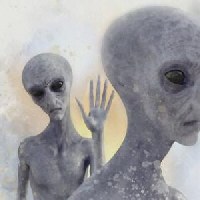
It sounds unbelievable, but scientists from Harvard University believe our entire universe may have been created in a lab by an advanced civilization with an immense knowledge of physics and how to control it.
For pranksters, there is no better holidaythan April Fools' Day. Celebrated annually on April 1, it is the only day of the year when fun, harmless hoaxesgo unpunished. Themischievous holiday has murky origins. Somebelieve itstarted in 1582when France transitioned from the Julian calendar which began the year around April 1 to the currently usedGregorian calendar. Thoseunaware, or unwilling, to accept thedate change werepranked.Others thinkthe holiday startedas a cheerful way to mark the start of spring.
When you see a panda at the zoo, it stands out against the green bamboo that it eats all day. But that setting is misleading. In the wild, the pandas black-and-white patches help it to blend in with its background. That keeps the animal camouflaged against predators like tigers, leopards and dholes, a type of wild dog, a new study finds.
We have been fooled into thinking that [pandas] are much easier to see than they are in the wild. If we want to understand animal coloration, we need to look at species where they live, says Tim Caro. Hes a zoologist at the University of Bristol in England. He is a co-author on the new study, which was published October 28 in Scientific Reports.
The giant panda (Ailuropoda melanoleuca), a rare species of bear, lives in remote mountain forests in southwest China. Earlier research had shown that pandas white patches help them blend into snowy areas. And their dark legs and shoulders match well with shady bits of forest. Or at least they do to human eyes.
We tend to usually overestimate how well animals can see because our own color perception is so good, says Ossi Nokelainen. He is an ecologist at the University of Jyvskyl in Finland.
For their new study, Nokelainen, Caro and their colleagues obtained 15 images of pandas in the wild. They then corrected the photos to match how domestic dogs and cats would see the images. Dogs and cats arent dholes and tigers, but their vision should be similar. And the images showed that the pandas should be well-camouflaged from their predators, at least from a distance.
This makes sense, says Nokelainen, since pandas have to stay in one place, fairly still, for a long time to eat enough bamboo. They can just evade the predators in a way that they cant be detected easily by the predators.
JoAnna Wendel
What did you think of this comic? Let us know by taking this short survey. Thanks!
Savanna (noun, Suh-van-uh)
If you’ve ever seen The Lion King, you’ve seen a savanna. A savanna is a rolling grassland scattered with trees and shrubs. This type of ecosystem covers about 20 percent of the world’s land. That includes nearly half of Africa. The African savanna is home to lions, hyenas, zebras and other Lion King creatures. The Australian savanna hosts animals like kangaroos and wallabies. Savannas are also found in South America and Asia. And in North America, the oak savanna is one of the worlds most endangered ecosystems.
Most people may be familiar with the African savanna. But did you know North America has savannas, too? These grasslands are scattered with oak trees.Steepcone/Wikimedia Commons (CC BY-SA 3.0)
Most savannas don’t have the four seasons you might be familiar with. These areas alternate between dry winters and wet summers. During the winter, a savanna may not get rain for months at a time. That prevents many trees from growing there. Dry conditions also allow savannas to catch fire easily. Those fires prevent young trees from growing up and turning these habitats into forests. But heavy summer rains help thick grasses grow. That prevents the savanna from being a desert.
In a sentence
African savanna elephants are the largest land mammals in the world.
Check out the full list of Scientists Say.
Excess nutrients, such as nitrogen and phosphorus, can harm coastal ecosystems. In the past researchers have mostly focused on excess nutrients from farms, usually from fertilizer that runs off fields instead of sticking around in the soil. Now, a new model explores the global impact of nitrogen from sewage and finds that nutrients in our poop and pee are also causing harm.
Explainer: The fertilizing power of N and P
Coastal areas face dangers ranging from climate change to overfishing to pollution. And sewage may pile on to these problems. An influx of nutrients can lead to eutrophication. That process causes oxygen levels in the water to drop to low levels that can kill fish and other creatures.
Coral reefs and seagrass beds are important ecosystems that are home to many creatures. Researchers at the University of California, Santa Barbara wanted to explore which coastal areas receive the most nitrogen and determine the risks to these key ecosystems. So they created a computer model.
However, theres a lot scientists dont know about the flow of nutrients from sewage into the ocean. And what they do know isnt spread evenly around the world. For example, researchers have more data on nutrients from sewer systems. But many places lack sewers.
To get past that data shortage, the researchers looked at what people eat. Protein from food is a major source of nitrogen in wastewater. The scientists used protein consumption and population size and density to calculate how much nitrogen people excrete in various locations. They then accounted for how wastewater treatment removes nitrogen.
The researchers combined this data with a high-resolution map of watersheds worldwide. That showed where the nitrogen flows. Overall, wastewater dumps 6.2 teragrams (13.7 billion pounds) of nitrogen into the ocean, according to the model. Thats equal to about 40 percent of the nitrogen that comes from agriculture, the scientists report November 10 in Plos One.
The new results suggest that 58 percent of coral reefs and 88 percent of seagrass beds receive wastewater nitrogen. And the model allows researchers to zoom in on specific areas. This could help guide conservation efforts, the authors suggest.
Coral reefs and seagrass under threat
These maps show where nitrogen may threaten coral reefs (A) and seagrass (B). (Use the arrows at left and right to switch between the images). They are based on a computer model that researchers developed. The model simulates how nitrogen gets into coastal environments. First, the model estimates how much nitrogen ends up in sewage based on what people eat and where they live. Then it adjusts the nitrogen levels in the sewage based on wastewater treatment. Finally, using a very detailed map of the worlds watersheds, the model simulates how the nitrogen flows out to sea. These maps take results from the model and label whether nitrogen concentrations are high (High wastewater impact) or low (No wastewater impact) at areas with corals (A) and seagrass (B). Click here to see both graphs in one image.
Tuholske et al/Plos One 2021 (CC BY 4.0)Tuholske et al/Plos One 2021 (CC BY 4.0)
Data dive:
Open up a visualization of the model here. Its easiest to see the nitrogen data when Dark mode is selected. Make sure theres a check mark next to Location Names and Nitrogen Plumes. Zoom in on the coastal area closest to where you live. What is the concentration of the nitrogen there?Can you find any places that receive 100,000,000 grams of nitrogen/year? (Hint: you may have to zoom in a lot.) How about 1,000,000,000 grams?Check the box next to Nitrogen Source. What do you notice about the places that light up?Look at Map A above. Some areas are hotspots for coral wastewater impact. These have lots of red dots clustered together. Where are these areas? What do they have in common?Where are corals less likely to experience risks from nitrogen?Look at Map B. What are hotspots for seagrass wastewater impact?Where is seagrass less likely to experience risks from nitrogen?
A newfound trove of fossils in South America offers a peek into dinosaur family life. All of them belonged to a species known as Mussaurus patagonicus (Muh-suh-SAW-us Pat-uh-GON-ih-kah). It was an early, smallish ancestor of huge, long-necked sauropods (SAHR-oh-pahdz). (Think Apatosaurus and the behemoth Dreadnoughtus schrani.) The jumble of fossilized eggs, nests and bones now suggest these creatures traveled in herds.
Clutches of eggs were found alongside the skeletons of dozens of newborn, juvenile and adult dinos. This mix suggests the creatures stayed together throughout their lives. Their herds would have roamed some 193 million years ago. Other types of dinos showed signs of herd-living. But the new fossils are at least 40 million years older than the previously oldest evidence of dinosaur herds. Researchers described the new find October 21 in Scientific Reports.
This fossilized egg dates to about 193 million years ago. It was found in dry southern Argentina. The site held bones from individuals of many ages as well as egg clutches. Together, they suggest these dinos traveled in herds.Roger Smith
Diego Pol is a paleontologist with the Museum of Paleontology Egidio Feruglio. Thats in Trelew, Argentina. He was part of a team that unearthed the new fossils in southern Argentina. They found 80 dinosaurs and more than 100 eggs.
Each nest held eight to 30 eggs. Pols group closely examined five of the nests. In each, the eggs lay in two or three layers within shallow trenches. The age of the herding animals ranged widely. A close review showed some skeletons turned up at least two adults and nine juveniles. At least 11 others were under a year old.
Explainer: The age of dinosaurs
Fossils of the first known dinosaurs date to around 245 million years ago. By about 201 million years ago, the Triassic Period was coming to an end. Sauropod ancestors, including Mussaurus, were among the most abundant plant eaters on land. Mussaurus roamed in whats now Patagonias deserts. During their era, this area was semi-dry. Nearby was a lake that may have flooded and sometimes evaporated. A sudden flood might explain this herds demise.
Mind-bogglingly massive sauropods didnt arise until the Jurassic Period. That came just after the Triassic. But fossils of Triassic relatives like Mussaurus were already showing evidence of a growth spurt. Bigger bodies would have needed more food. Those needs may have encouraged these creatures to work together. Forming herds would have helped them forage across long distances, the researchers suggest.
Modern-day rhinos,which weigh anywhere from 1,800 to5,100 pounds, are no lightweights. However, they pale in comparison totheir prehistoric cousinthat roamed China about 26million years ago.The massive mammal weighed 46,000 pounds almost as much as four largeAfricanelephants. Standing ata heightof23ft (7m), it was alsotaller than a giraffe.
A long string of galaxies appears to form an arc stretching more than 3 billion light-years across the distant universe. If the arc turns out to be real, it would challenge a basic idea about how the cosmos is structured. Its known as the cosmological principle. And it holds that no matter where you look in the universe, on large scales matter will be distributed fairly evenly.
If it now turns out that this is not true as the newfound arc suggests it would overturn cosmology as we know it, said Alexia Lopez on June 7. She spoke at a news conference at a virtual meeting of the American Astronomical Society. It would mean, she said, that our standard model, not to put it too heavily, kind of falls through.
As a cosmologist, Lopez studies the origins and evolution of the universe. She works at the University of Central Lancashire in Preston, England. She was part of a team that discovered the distant structure. They call it simply the Giant Arc.
Astronomers discovered what they say is a giant arc of galaxies (smile-shaped curve in the middle of this image) by using the light from distant quasars (blue dots) to map out where in the sky that light got absorbed by magnesium atoms in the halos (dark spots) that surround foreground galaxies.A. Lopez
The arc turned up as the researchers were studying images captured as part of the Sloan Digital Sky Survey. That survey, which covers about one-third of the sky, includes the most detailed three-dimensional maps of our universe. It includes light spectra for more than three million astronomical objects.
Lopezs team focused on light from some 40,000 quasars. These are the glowing cores of giant galaxies. Yet they are so distant they appear as mere points of light. On its way to Earth, some of that light gets absorbed by atoms in and around galaxies nearer to us. This absorption creates a signature change in the light that eventually reaches telescopes on Earth or in space.
The Giant Arcs signature is due to magnesium atoms. Each has lost one electron. Theyre glowing in the halos of galaxies about 9.2 billion light-years away. Quasar light absorbed by those atoms traces out a nearly symmetrical curve. That curve contains dozens of galaxies. Lopez reports that together they span about one-fifteenth the radius of the observable universe.
That arc is invisible to the human eye. But if you could see it from Earth, it would span about 20 times the width of the full moon.
See nearly 400,000 galaxies in this animation, which contains images of the actual galaxies in these positions (or sometimes their near cousins). It was made from data derived from release 7 of the Sloan Digital Sky Survey (SDSS). The animations come from Miguel Aragon and Alex Szalay of Johns Hopkins University and Mark Subbarao of Chicagos Adler Planetarium.
The arc as cosmic dilemma
The problem is that this arc makes part of the sky seem too organized. The galaxies are not as evenly distributed as astronomers have always thought they should be.
As such, this finding is a very fundamental test of the hypothesis that the universe is homogeneous on large scales, says Subir Sarkar. Hes an astrophysicist at the University of Oxford in England. Although he studies large-scale structures in the cosmos, he did not take part in the new work. If the Giant Arc is real, he says, this is a very big deal.
But not all researchers are convinced the arc is real. Our eye has a tendency to pick up patterns, Sarkar notes. For instance, he points out that some people have claimed to see Stephen Hawkings initials written in fluctuations of the background cosmic microwave radiation. This is the oldest light in the universe.
Lopez ran three mathematical tests to figure out the odds that galaxies would line up in a giant arc just by chance. All three suggest that the structure is real. One test surpassed physicists gold standard that the odds of it being a statistical fluke should be less than 0.00003 percent.
That sounds pretty good, but it may not be good enough, Sarkar says. Right now, he says, I would say the evidence is tantalizing, but not yet compelling.
More observations may be needed to firmly support or refute the presence of a Giant Arc.
Explainer: Stars and their families
But if the Giant Arc is real, it would join a growing group of large-scale structures in the universe that, when taken together, break the standard model of cosmology. This model assumes that when you look at large enough volumes of space above about 1 billion light-years across matter will map out evenly. The Giant Arc, however, appears about three times as long as that threshold.
And its not the only such seeming anomaly. There are a number of other large structures in the sky. These include the Sloan Great Wall, the Giant Gamma-Ray Burst Ring and the Huge Large Quasar Group.
With one large-scale structure, that could just be a statistical fluke, Lopez says. Thats not the problem. All of [those big structures] combined is what makes the problem even bigger.
When is a parasite not a parasite? Answer: When it provides a benefit to its host. Consider some microbes long thought to bring only harm to coastal mussels. New research shows some may actually help their hosts survive dangerous heat waves.
Called cyanobacteria (Sy-AN-oh-bak-TEER-ee-uh), these bacteria bore into the mussels outer shells. Studies had shown this can weaken mussel shells, notes Katy Nicastro. Shes a marine biologist at Rhodes University in South Africa. Being infested with those microbes can slow a mussels growth and reproduction, too. It can even cause the shells to shed their dark outer coat. But lighter-colored shells absorb less sunlight. And that might keep their hosts from overheating on sunny days.
Nicastro and her teammates wanted to know just how much heat protection those microbes might offer. So they collected mussels in Europe. They retrieved them from a rocky shore in northern Portugal. Some mussels had shells infested with the microbes. These had large white patches. Non-infested mussels had normal dark shells.
The researchers first removed the mussels from their shells. Then they inserted temperature sensors inside those shells. They placed these robomussels at nine coastal sites across Europe. The most northerly sites were in the Orkney Islands, north of Scotland. The most southerly sites were in Portugal.
Up to a dozen robomussels were glued next to live mussels on rocks in the intertidal zone. Here, seawater would cover the shells at high tide. Low tide would expose them to the air and sun. The sensors showed the temperature could drop 8 degrees Celsius (14.4 degrees Fahrenheit) or more when the shells were submerged.
Those sensors took measurements every half hour from August 1 to September 13, 2017. In the end, the researchers had to ignore data from three sites where weather records were not available.
Trends for the other six sites were clear. When not underwater, dark-shelled robomussels warmed faster. Sensors inside the dark-shelled robomussels also reached a higher temperature than the lighter-shelled ones. The team described its work in the June Global Change Biology.
Shells whitened by microbial infestation (top left) help mussels stay cool on hot, sunny days. In the thermal image (bottom), reds and yellows represent hotter temperatures.K. Nicastro
These data suggested shell color could mean the difference between life and death for mussels. So for these microbe infestations, Nicastro says, Now we have to consider the balance between positive and negative effects. It appeared those microbes can sometimes help the mussels.
To test that, Nicastros team looked at death rates for mussels during three 2018 heat waves in France. More than 95 percent of the mussels dying during the heat waves had dark shells, studies showed. Dark-shelled mussels were likely between 1.67 and 4.77 C (3 and 8.6 F) warmer than those with lighter shells. This suggests light-shelled mussels were more likely to survive.
Shell-weakening microbes usually are not viewed as a good thing for mussels, says Christopher Harley. Hes a marine biologist at the University of British Columbia in Vancouver, Canada. But during heat emergencies, that can save [a mussels] life, he says.
Mussels may not seem to be important creatures, but they are, says Harley. At low tide, intertidal mussel beds provide a moist, cool habitat. Hundreds of different species live among them. This includes everything from hermit crabs and worms to sponges and sea cucumbers. Indeed, Harley says, Mussel beds are the apartment complex of the rocky shore.
Search
Kidz News
This is the place where you can share and discuss cool things with others.